


(Last Update: August 02, 2013)
Maglev Keywords:
Maglev, Magnetic levitation, Maglev technology, Maglev system,
Spacecraft, Rocket, Centrifuge, Nuclear reactor, Lamp, Wind Turbine,
Chair, Sofa, Fan, Game, Magnet, Compressor, Chiller, Pump, Chemistry,
Gun, Photolithography, Heart pump, Blood pump, Elevator, Lift, Freight
elevator, Washing machine, Car, Vehicle, Automobile, Race, Bed,
Advertising, Toy, Pen
Magnetic Levitation Technology
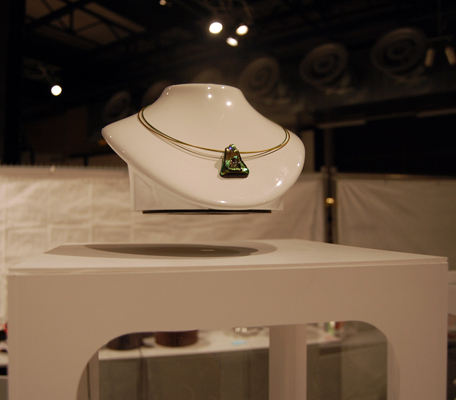
Magnetic levitation (maglev) is a highly advanced technology. It has various cases, including clean energy (small and huge wind turbines: at home, office, industry, etc.), building facilities (fan), transportation systems (magnetically levitated train, Personal Rapid Transit (PRT), etc.), weapon (gun, rocketry), nuclear engineering (the centrifuge of nuclear reactor), civil engineering (elevator), advertising (levitating everything considered inside or above various frames can be selected), toys (train, levitating spacemen over the space ship, etc.), stationery (pen) and so on. The common point in all these applications is the lack of contact and thus no wear and friction. This increases efficiency, reduce maintenance costs and increase the useful life of the system. The magnetic levitation technology can be used as a highly advanced and efficient technology in the various industrial. There are already many countries that are attracted to maglev systems. Many systems have been proposed in different parts of the worlds, and a number of corridors have been selected and researched. Maglev can be conveniently considered as a solution for the future needs of the world.
Maglev Usages
- Transportation Engineering (Magnetically Levitated Trains, Personal Rapid Transit (PRT), etc.)
- Environmenal Engineering (Wind Turbines)
- Aerospace Engineering (Spacecraft, Rocket, etc.)
- Military Weapons Engineering (Rocket, Gun, etc.)
- Nuclear Engineering (Centrifuge)
- Civil Engineering and Building Facilities (Elevator, Lift, Fan, Compressor, Chiller, Pump, etc.)
- Biomedical Engineering (Heart Pump, etc.)
- Chemical Engineering (Analyzing Foods and Beverages, etc.)
- Electrical Engineering (Magnet, etc.)
- Architectural Engineering and Household Appliances (Lamp, Chair, Sofa, Bed, Washing Machine, etc.)
- Automotive Engineering (Car, etc.):
Free Maglev Document to Download
Please click here
Some Maglev Information Links
Some Maglev Institutions
|
|
Website |
Institution/Company |
Field |
|
info@maglev.ir |
Iran Maglev Technology (IMT) |
||
| info@ssbc.ir | http://SSBC.ir | Sara Sazane Basir Company (SSBC) | All Technologies |
|
public-inquiries@hq.nasa.gov |
NASA's Marshall Space Flight Center |
||
|
- |
- |
- |
The Centrifuge of Nuclear Reactors |
|
info@floating-lamps.com |
Crealev Levitation Technology |
Maglev Lamp |
|
|
- |
- |
Maglev Wind Turbine Technologies |
Maglev Wind Turbine |
|
keith@hoverit.co.uk |
Hoverit |
Maglev Chair |
|
|
1-1)
sunon@email.sunon.com.tw |
|
1) Taiwan |
|
|
- |
http://guildhall.smu.edu |
Southern Methodist University (SMU) |
Maglev Game |
|
frontdesk@magnet.fsu.edu |
National High Magnetic Field Laboratory |
Magnet |
|
|
dthatcher@multistack.com |
MagLev Retrofit Solutions |
Maglev Compressor, Chiller, Pump, etc. |
|
|
1)
sphillips@psu.edu |
1) The Phillips Group 2) Department of Chemistry and Chemical Biology, Harvard University, Cambridge, Massachusetts |
Chemistry |
|
|
sam@power-labs.com |
Sam Barros' PowerLabs |
Maglev Gun |
|
|
- |
- |
- |
Photolithography Systems |
|
- |
- |
- |
Maglev Haptics |
|
2)
jfiske@appliedlevitation.com |
1) DuraHeart |
Maglev Heart Pump |
|
|
1) elevator@po.toshiba.co.jp 5-1) enquiry@msee.com.my 8) siamind@yahoo.com
|
1) http://toshiba-elevator.co.jp/elv/infoeng/projects/major03.jsp 3) http://m.adenan@toshindo-id.com
|
1) JAPAN:
Toshiba Elevator and Building Systems |
Maglev Elevator |
|
Korea Electronic Research Institute (KERI) |
|||
|
j.lekes@centrum.cz jakub.lekes@teapot.cz |
Designer: Jakub Lekes |
Maglev Washing Machine |
|
|
2) |
1) Citroen: |
Maglev Car |
|
|
Universe
Architecture |
|||
|
So many |
So many |
So many |
Advertising |
|
So many |
So many |
So many |
Toy |
|
So many |
So many |
So many |
Stationery |
|
- |
- |
- |
Computer Hardware |
|
- |
- |
- |
Maglev Joystick |
| - | - | The University of Texas M.D. Anderson Cancer Center. | Growing 3D Cell Cultures |

Some Maglev Journal or Conference Papers / Reports
|
Journal/Conference Papers |
Institute |
Author(s) Name(s) |
| "Development of a maglev vehicle/guideway system interaction model and comparison of the guideway structural analysis with railway bridge structures", ASCE, Journal of Transportation Engineering, vol. 137, issue 2, pp. 140-154, February 2011, ISSN: 0733-947X, e-ISSN: 1943-5436. | Iran Maglev Technology (IMT) | Hamid Yaghoubi; H. Ziari, |
| "Development of maglev guideway loading model", ASCE, Journal of Transportation Engineering, vol. 137 issue 3, pp. 201-213, March 2011, ISSN: 0733-947X, e-ISSN: 1943-5436. | Iran Maglev Technology (IMT) | Hamid Yaghoubi; M. A. Rezvani |
| “Development of technical and economical models for widespread application of magnetic levitation system in public transport”, International Journal of Civil Engineering (IJCE), vol. 10, no. 1, pp. 13-24, March 2012, ISSN: 1735-0522. | Iran Maglev Technology (IMT) | H. Behbahani; Hamid Yaghoubi; M. A. Rezvani, |
| "Mechanical assessment of maglev vehicle – a proposal for implementing maglev trains in Iran", The ASME 10th Biennial Conference on Engineering Systems Design and Analysis (ESDA), Yeditepe University, Istanbul, Turkey, Vol. 2, 299-306, ISBN: 978-0-7918-4916-3, 2010. | Iran Maglev Technology (IMT) | Hamid Yaghoubi; M. Sadat Hoseini |
| "The most important advantages of magnetically levitated trains", ASCE, 11th International Conference of Chinese Transportation Professionals (ICCTP), Nanjing, China, ISBN 978-0-7844-1186-5, pp. 3974-3986, 2011. | Iran Maglev Technology (IMT) | Hamid Yaghoubi |
| "Design and Evaluation Criteria for Stations of Magnetically Levitated Trains", Journal of Civil Engineering and Science (JCES), World Academic Publishing (WAP), Hong Kong, June 2013 (2013-06-28), Vol. 2, No. 2, pp. 72-84, ISSN: 2227-4634 (print), ISSN: 2227-4626 (online). | Iran Maglev Technology (IMT) | Hamid Yaghoubi; Mahmood Reza Keymanesh
|
| "The Most Important Maglev Applications", Journal of Engineering, Hindawi Publishing Corporation, New York, USA, ISSN: 2314-4912(Print), ISSN: 2314-4904(Online), Volume 2013, Published: 27 March 2013, Article ID 537986, 19 pages, doi:10.1155/2013/537986. | Iran Maglev Technology (IMT) | Hamid Yaghoubi |
| "Technical Comparison of Maglev and Rail Rapid Transit Systems", The 21st International Conference on Magnetically Levitated Systems and Linear Drives (MAGLEV 2011), October 10-13, 2011, Daejeon Convention Center, Daejoen, Korea. | Iran Maglev Technology (IMT) | Hamid Yaghoubi; Nariman Barazi; Keyvan Kahkeshan; Alireza Zare; Hossein Ghazanfari |
| "Practical Applications of Magnetic Levitation Technology", Iran Maglev Technology (IMT), Final Report, September 2012, Tehran, Iran. | Iran Maglev Technology (IMT) | Hamid Yaghoubi |
|
Inst. of BME, Jiangsu Univ., Zhenjiang, China |
Qian, K.X.; Jing, T. |
|
|
NASA’s Marshall Space Flight Center |
- |
|
|
“Three-dimensional Flux Analysis and Guidance Path Design of an Axial-flow |
- Department of Electrical Engineering, National Sun Yat-Sen University
- Sunonwealth Electric Machine Industry Co., Ltd. |
Cheng-Tsung Liu, Tsung-Shiun Chiang, and Alex Horng |
|
“Three-dimensional Force Analyses of an Axial-flow Radial-flux Permanent Magnet |
- Department of Electrical Engineering, National Sun Yat-Sen University,
- Sunonwealth Electric Machine Industry Co., Ltd. |
Cheng-Tsung Liu, Tsung-Shiun Chiang, Alex Horng |
|
"Design, Fabrication, and Control of a Single Actuator Maglev Test Bed" |
- Department of Mechanical Engineering, Texas A&M University
- National Science Foundation |
Stephen Paschall II and Won-jong Kim |
|
Inst. BME, Jiangsu Univ. Zhenjiang, China |
Kun-Xi Qian, Wei-Min Ru, Hao Wang, and Teng Jing |
|
|
Sch. of Electr. Eng., Shandong Univ., Jinan, China |
Yunpeng Zhang; Shuqin Liu; Yong Guan; Hongwei Li; Youpeng Fan |
|
|
School of mechanical and electronic engineering, Wuhan University of Technology, China |
Huanchun Wu, Ziyan Wang, Yefa Hu |
|
|
Volume: 3, Issue: 2, Pages: 42-48.
|
Wuhan University of Technology, Wuhan, China |
Huachun Wu, Ziyan Wang, Xujun Lv |
|
Sch. of Electr. Eng., Shandong Univ., Jinan, China |
Yong Guan; Shuqin Liu; Hongwei Li; Youpeng Fan; Yunpeng Zhang; |
|
|
Institute of Biomedical Engineering, Jiangsu University, Zhenjiang, Jiangsu, China |
K.X. Qian, P. Zeng, W.M. Ru, H.Y. Yuan |
|
|
Tokyo Institute of Technology, Yokohama, Japan |
Chi Nan Pai, Tadahiko Shinshi, Akira Shimokohbe |
|
|
Rochester Institute of Technology, Rochester, NY, USA |
Shanbao Cheng, Mark W. Olles, Aaron F. Burger, Steven W. Day |
|
|
The Phillips Group |
Mirica, K. A., Phillips, S. T., Mace, C. R., Whitesides, G. M., J. Agric. |
|
|
The Phillips Group |
K. A.; Shevkoplyas, S. S.; Phillips, S. T.; Gupta, M.; Whitesides, G. M. |
|
|
The Phillips Group |
Mirica, K. A.; Phillips, S. T.; Whitesides, G. M. |
Some Maglev Train Institutions
|
Iran Maglev Technology (IMT) |
|
| http://SSBC.ir | Sara Sazane Basir Company (SSBC) |
| http://finance.groups.yahoo.com/group/UrbanMaglev/ | Urban Maglev Interest Group |
|
|
Transrapid International (TRI) ThyssenKrupp Transrapid GmbH
|
|
Transrapid International-USA |
|
|
Shanghai Maglev Office |
|
|
- |
Railway Technical Research Institute (RTRI) and JR Central |
|
American Maglev Technology (AMT) |
|
|
- |
General Atomics (GA) (San Diego, CA) |
|
MagneMotion, Inc. (Acton, MA) |
|
|
- |
Old Dominion University (ODU) (Virginia) |
|
Federal Transit Administration (FTA) - Office of Research, Demonstration, and Innovation - Office of Mobility Innovation
|
|
|
|
FRA (Federal Railroad Administration) |
|
|
American Magline Group (AMG) |
|
|
Rotem (part of the Hyundai Motor Group in Seoul, Korea)
|
|
|
MOST - Korean Ministry of Science and Technology |
|
|
Maglev Urban System Associates (MUSA), (Baltimore, MD) |
|
Maglev 2000 (M2000), (Titusville, FL) |
|
|
|
the Colorado Department of Transportation (CDOT) |
|
|
American Society of Civil Engineers (ASCE) |
|
|
Maglev Inc. |
|
Office of Planning, Maryland Transit Administration
|
|
|
|
|
|
|
|
|
US Maglev Coalition |
|
|
International Maglevboard e.V.
|
|
|
North American Maglev Transport Institute |
|
|
Max-Bögl |
|
|
|
Korea Institute of Machinery and Materials (KIMM) |
Some Journals:
- Journal of Transportation Engineering, American Society of Civil Engineers (ASCE)
- International Journal of Civil Engineering (IJCE)
- Journal of Civil Engineering and Science (JCES), World Academic Publishing (WAP)
- Journal of Engineering, Hindawi Publishing Corporation
- Vehicle System Dynamics, Taylor & Francis
- Proceedings of the Institution of Mechanical Engineers, Part F: Journal of Rail and Rapid Transit
- Proceedings of the ICE - Transport, Institution of Civil Engineers (ICE)
- Coupled Systems Mechanics (CSM), Techno-Press
- Scientific Research and Essays (SRE), Academic Journals
- Current Engineering and Technological Research (CETR), Online Research Journals (ORG)
- Online International Journal of Engineering and Technology Research (OIJETR), Online Research Journals (ORG)
- Structural Engineering and Mechanics (SEM), Techno-Press
Iran Maglev Technology (IMT)
© April, 2008, Maglev.ir. All Rights Reserved.
